Cross-age peer tutoring using a design-based research approach to expand computer science education in schools
DOI:
https://doi.org/10.32674/0vek9a82Keywords:
computer science education, cross-age, peer tutoring, STEM, design-based researchAbstract
In times of increased demand for the implementation of computer science as a compulsory subject in schools in Germany, additional human resources are required. These are reduced due to the shortage of skilled workers. The concept of "learning to teach" and cross-age peer tutoring enables older students to teach younger students, which has been shown to have positive effects on both groups. This approach is to be realized and evaluated in the "Minteers" project in order to develop a solution approach for lessons in computer science. Based on the design-based research approach, a solution for a concept in cross-age peer tutoring for schools is being explored. This is based on a preliminary examination of the conceptual foundations, followed by testing of the prototypes with the implemented didactic concepts. In the evaluation phase, the concepts and the materials are now being continuously developed and adapted.
References
Akudo, K. O., Olaoye, A. A., Sojinu, O., Alabi, I. A., Chukwulobe, I., & Gbeleyi, O. A. (2025). Cross-Age Peer-Tutoring: An Effective Strategy for Enhancing Students' Retention in Mathematics. Journal of Educational Sciences, 9(1), p. 208-230. https://doi.org/10.31258/jes.9.1.p.208-230
Anger, C., Betz, J., & Plünnecke, A. (2025). MINT-Frühjahresreport 2025. Köln: Institut der deutschen Wirtschaft Köln e.V.
Ashlame, A. P., & Iwanger, S. R. (2019). Comparative effects of peer tutoring and explicit instructional strategies on science and technical college students' achievement and retention in Nasarawa State, Nigeria. International Journal of Research- Granthaalayah, 7(10), p. 390-399. https://doi.org/10.5281/zenodo.3532036
Chang, A., Mauer, E., Wanzek, J., Kim, S., Scammacca, N., & Swanson, E. (2025). Examining the Academic Effects of Cross-age Tutoring: A meta-analysis. Educational Psychology Review, 37(1). https://doi.org/10.1007/s10648-025-09997-z
Cohen, J. (1986). Theoretical considerations of peer tutoring. Psychology in the Schools, 23(2), p. 175-186.
Cole, M., John-Steiner, V., Scribner, S., & Souberman, E. (1978). Mind in society. Mind in society the development of higher psychological processes. Cambridge: Harvard University Press.
Gesellschaft für Informatik e.V. (2025a). Informatikunterricht in Nordrhein-Westfalen. Retrieved from https://informatik-monitor.de/2025-26/laendervergleich/nordrhein-westfalen [2026, January 5th]
Gesellschaft für Informatik e.V. (2025b). Monitoring der Kernindikatoren zum Informatikunterricht. Retrieved from https://informatik-monitor.de/2025-26/kernindikatoren [2026, January 5th]
Euler, D. (2014). Design-Based Research (Vol. 27). In D. Euler, & P. F. Sloane (ebs.), Franz Steiner Verlag.
Hidayat, R., & Mohd Saad, M. R. (2025). A Meta-analysis of the effect of peer tutoring in Science, Technology, Engineering and Mathematics (STEM) subjects. International Journal of Educational Research Open, 8. https://doi.org/10.1016/j.ijedro.2025.100446
Karcher, M. (2007). research in action Cross-Age Peer Mentoring (Vol. 7).
Ständige Wissenschaftliche Kommision der Kulurministerkonferenz (SWK) (2022). Digitalisierung im Bildungssystem: Handlungsempfehlungen von der Kita bis zur Hochschule. Gutachten der Ständigen Wissenschaftlichen Kommission der Kulturministerkonferenz (SWK). http://dx.doi.org/10.25656/01:25273.
Korner, M., & Hopf, M. (2015). Cross-Age Peer Tutoring in physics: tutors, tutees, and achievement in electricity. International Journal of Science and Mathematics Education, 13, S. 1039-1063. https://doi.org/10.1007/s10763-014-9539-8
Kröpke, H. (2014). Who is who? Tutoring und Mentoring- der Versuch einer begrifflichen Schärfung. In D. Lenzen, & H. Fischer (ebs.), Tutoring und Mentoring unter besonderer Berücksichtigung der Orientierungseinheit (Vol. 5, p. 21-30). Hamburg: Universitätskolleg-Schriften.
Martin, J., & Kelchner, R. (1998). Lernen durch Lehren. In J. Timm (ebs.), Englisch lernen und lehren. Didaktik des Englischunterrichts (p. 211-219). Berlin: Cornelson.
Ministerium für Schule und Bildung des Landes Nordrhein-Westfalen (2019). Kernlehrplan für die Sekundarstufe 1 Gymnasium in Nordrhein-Westfalen Biologie. Retrieved from https://lehrplannavigator.nrw.de/system/files/media/document/file/g9_bi_klp_-3413_2019_06_23_0.pdf [2026, January 5th]
Ministerium für Schule und Bildung des Landes Nordrhein-Westfalen (2021). Kernlehrplan für die Sekundarstufe 1- Klasse 5 und 6 in Nordrhein-Westfalen Informatik. Retrieved from https://lehrplannavigator.nrw.de/system/files/media/document/file/si_kl5u6_if_klp_2021_07_01.pdf [2026, January 5th]
Perseke, N. (2020). Calliope Baustein für die zeitgemäße Bildung. In A. Ternès von Hattburg, & M. Schäfer (ebs.), Digital Pakt- was nun? Ideen und Konzepte für zukunftsorientiertes Lernen (p. 259-266). Wiesbaden: Springer VS. https://doi.org/10.1007/978-3-658-25530-5_29
Reinmann, G. (2005). Innovation ohne Forschung? Ein Plädoyer für den Design-Based Research-Ansatz in der Lehr-Lernforschung. Unterrichtswissenschaft, 33(1), p. 52-69. https://doi.org/10.25656/01:5787
Romeike, R. (2017). Wie informatische Bildung hilft, die digitale Gesellschaft zu verstehen und mitzugestalten. In Software takes command. Herausforderungen der "Datafizierung "für die Medienpädagogik in Theorie und Praxis (p. 105-118). München: kopaed.
Tenhovirta, S., Korhonen, T., Seitamaa-Hakkarainen, P., & Hakkarainen, K. (2022). Cross-age peer tutoring in a technology-enhanced STEAM project at a lower secondary school. International Journal of Technology and Design Education, 32, p. 1701-1723. https://doi.org/10.1007/s10798-021-09674-6
Tillmann, J., Wegner, C., Schmiedebach, M. (2021). Lernen durch Lehren- Satellitenlabore zur MINT-Förderung am Gymnasium. Journal of Technical Education (JOTED), 9(2), p. 34-58.
Tillmann, J. (2025). Konzeption und Evaluation von Satellitenlaboren- Das Potenzial des Peer-Tutoring für langfristige Schülerlaborkurse erkennen und nachhaltig nutzen. "Ich finde es spannend, wenn es ältere Schüler machen und es macht meistens auch mehr Spaß". Bielefeld: Universität Bielefeld.
Topping, K. J., & Bryce, A. (2004). Cross-Age Peer Tutoring of Reading and Thinking: Influence on thinking skills. Educational Psychology, 24(5). https://doi.org/10.1080/0144341042000262935
Topping, K (2020). Peer Tutoring and Cooperative Learning. Oxford Research Encyclopedia of Education. Retrieved from https://oxfordre.com/education/view/10.1093/acrefore/9780190264093.001.0001/acrefore-9780190264093-e-1432. [14.01.2026]
Wegner C, Schmiedebach M (2023). Design-Based Research zum Abbau des Transferdefizits durch die Untersuchung praxisrelevanter Fragestellungen der Begabungsforschung. Bildungsforschung von und für die Praxis. In: Fischer C, Fischer-Ontrup C, Käpnick F, Neuber N, Reintjes C (ebs.) Potenziale erkennen – Talente entwickeln – Bildung nachhaltig gestalten. Beiträge aus der Begabungsforschung. (p. 215-223); Münster; New York: Waxmann.
Additional Files
Published
Issue
Section
License
Copyright (c) 2026 Anne-Maria Schmer, Claas Wegner

This work is licensed under a Creative Commons Attribution 4.0 International License.
Copyright (c) [year] [author]
This work is licensed under a Creative Commons Attribution 4.0 International License.
This license permits unrestricted use, distribution, and reproduction in any medium, provided the original author and source are credited. https://creativecommons.org/licenses/by/4.0
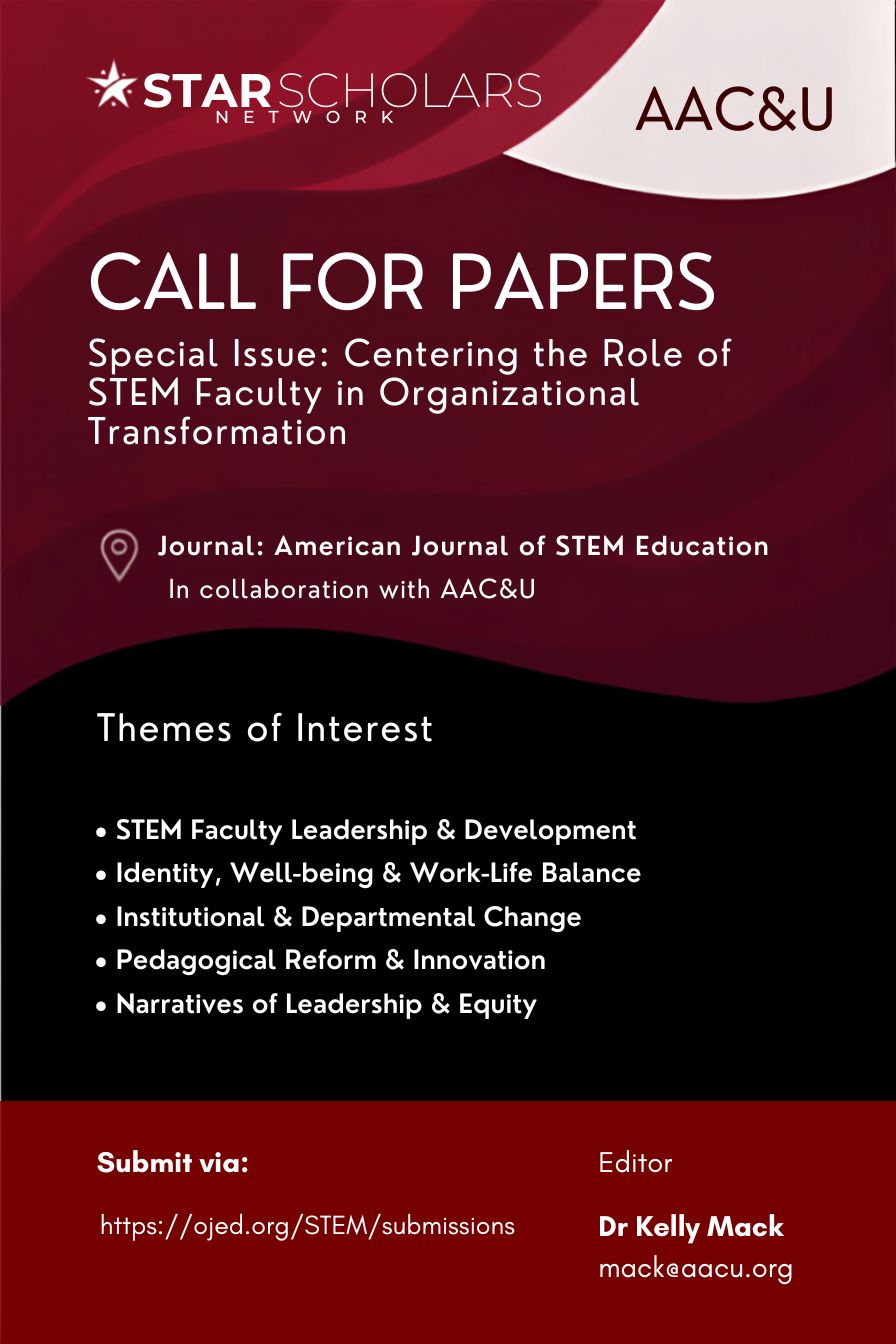
 Call for Special Issue Proposals