The power of five more dollars
Exploring the influence of incentives and reminders on the response rate for an online survey of STEM majors
DOI:
https://doi.org/10.32674/cnccbm96Keywords:
Response Rate, STEM , Incentives, Reminder Notifications, Survey ReserachAbstract
Survey research is widely used in STEM education. Low response rates may risk validity and representativeness. This study investigates the impact of monetary incentives, reminder notifications, and student demographics on survey response rates among STEM majors at a rural public university. An online survey was distributed to 2,046 STEM students, with key majors randomly assigned to the $0, $5, or $10 incentive condition and exposed to multiple reminder types. The results indicate that response rates increased by approximately 9% with each additional $5 incentive and were enhanced by personalized reminder messages. The combined use of modest incentives and targeted reminders increased response rates within targeted subgroups to as high as 71%. These findings offer practical methodological recommendations for researchers seeking to improve survey response rates within STEM populations.
References
Abdelazeem, B., Hamdallah, A., Rizk, M. A., Abbas, K. S., El-Shahat, N. A., Manasrah, N., Mostofa, M. R., & Eltobgy, M. (2023). Does usage of monetary incentive impact the involvement in surveys? A systematic review and meta-analysis of 46 randomized controlled trials. PloS One, 18(1), e0279128. https://doi.org/10.1371/journal.pone.0279128
Chen, T., Johnson, T. P., Ma, J., Frandell, A., Michalegko, L., & Welch, E. W. (2025). Invitation appeals and STEM academic scientists research participation: Findings from six survey experiments. PLoS One, 20(6), e0326331. https://doi.org/10.1371/journal.pone.0326331
Church, A. H. (1993). Estimating the effect of incentives on mail survey response rates: A meta-analysis. Public Opinion Quarterly, 57(1), 62–79. https://doi.org/10.1086/269355
Cook, C., Heath, F., & Thompson, R. L. (2000). A meta-analysis of response rates in web-or internet-based surveys. Educational and Psychological Measurement, 60(6), 821–836. https://doi.org/10.1177/00131640021970934
Daikeler, J., Bošnjak, M., & Lozar Manfreda, K. (2020). Web versus other survey modes: an updated and extended meta-analysis comparing response rates. Journal of Survey Statistics and Methodology, 8(3), 513–539. https://doi.org/10.1093/jssam/smz008
Daikeler, J., Silber, H., & Bošnjak, M. (2022). A meta-analysis of how country-level factors affect web survey response rates. International Journal of Market Research, 64(3), 306–333. https://doi.org/10.1177/14707853211050916
Dinh, J. M., Chrenka, E. A., Solberg, L., Andersen, J. A., Dehmer, S. P., Bergdall, A., Winger, M., & Jones, C. (2026). Impact of envelope teaser on mail and web research survey response rates and representation. BMC Medical Research Methodology, 26(72). https://doi.org/10.1186/s12874-026-02808-1
Eagly, A. H., & Crowley, M. (1986). Gender and helping behavior: A meta-analytic review of the social psychological literature. Psychological bulletin, 100(3), 283–308. https://doi.org/10.1037/0033-2909.100.3.283
Fan, W., & Yan, Z. (2010). Factors affecting response rates of the web survey: A systematic review. Computers in Human Behavior, 26(2), 132-139. https://doi.org/10.1016/j.chb.2009.10.015
Heerwegh, D., Vanhove, T., Matthijs, K., & Loosveldt, G. (2005). The effect of personalization on response rates and data quality in web surveys. International Journal of Social Research Methodology, 8(2), 85–99. https://doi.org/10.1080/1364557042000203107
Homans, G. C. (1958). Social Behavior as Exchange. American Journal of Sociology 63(6), 597–606. https://doi.org/10.1086/222355
Jia, P., Furuya-Kanamori, L., Qin, Z. S., Jia, P. Y., & Xu, C. (2021). Association between response rates and monetary incentives in sample study: A systematic review and meta-analysis. Postgraduate Medical Journal, 97(1150), 501–510. https://doi.org/10.1136/postgradmedj-2020-137868
Kosakow, J., & Greenberg, P. (2026). Testing motivation-based vs. social exchange communication strategies in eMail survey recruitment. Social Science Computer Review, 44(2), 231–244. https://doi.org/10.1177/08944393241308509
Manfreda, K. L., Bosnjak, M., Berzelak, J., Haas, I., & Vehovar, V. (2008). Web surveys versus other survey modes: A meta-analysis comparing response rates. International Journal of Market Research, 50(1), 79–104. https://doi.org/10.1177/147078530805000107
Mistry, K., Merrick, S., Cabecinha, M., Daniels, S., Ragan, J., Epstein, M., Lever, L., Venables, Z. C., & Levell, N. J. (2026). Fraudulent participation in online qualitative studies: practical recommendations on an emerging phenomenon. Qualitative Health Research, 36(7), 647–657. https://doi.org/10.1177/10497323241288181
Neal, Z., Neal, J. W., & Piteo, A. (2020). Call me maybe: Using incentives and follow-ups to increase principals’ survey response rates. Journal of Research on Educational Effectiveness, 13(4), 784–793. https://doi.org/10.1080/19345747.2020.1772423
Porter, S. R., & Umbach, P. D. (2006). Student survey response rates across institutions: Why do they vary?. Research in Higher Education, 47(2), 229–247. https://doi.org/10.1007/s11162-005-8887-1
Porter, S. R., & Whitcomb, M. E. (2003). The impact of contact type on web survey response rates. The Public Opinion Quarterly, 67(4), 579–588.
Saleh, A., & Bista, K. (2017). Examining factors impacting online survey response rates in educational research: Perceptions of graduate students. Journal of MultiDisciplinary Evaluation, 13(29), 63–74. https://doi.org/10.56645/jmde.v13i29.487
Singer, E. & Ye, C. (2013). The use and effects of incentives in surveys. The Analysis of American Academy of Political and Social Science, 645(1), 112–141. https://doi.org/10.1177/0002716212458082
Smith, M. G., Witte, M., Rocha, S., & Basner, M. (2019). Effectiveness of incentives and follow-up on increasing survey response rates and participation in field studies. BMC Medical Research Methodology, 19(1), 230. https://doi.org/10.1186/s12874-019-0868-8
Sobolewski, J., Rothschild, A., & Freeman, A. (2024). The impact of incentives on data collection for online surveys: Social media recruitment study. JMIR Formative Research, 8, e50240. https://doi.org/10.2196/50240
Stoffel, S. T., Chaki, B., & Vlaev, I. (2024). Testing a decoy donation incentive to improve online survey participation: Evidence from a field experiment. PLoS One, 19(2), e0299711. https://doi.org/10.1371/journal.pone.0299711
Wilson, A. B., Brooks, W. S., Edwards, D. N., Deaver, J., Surd, J. A., Pirlo, O. J., Byrd, W. A., Meyer, E. D., Beresheim, A., Cuskey, S. L., Tsintolas, J. G., Norrell, E. S., Fisher, H. C., Skaggs, C. W., Mysak, D., Levin, S. R., Escutia Rosas, C. E., Cale, A. S., ... & Lufler, R. S. (2024). Survey response rates in health sciences education research: a 10‐year meta‐analysis. Anatomical Sciences Education, 17(1), 11–23. https://doi.org/10.1002/ase.2345
Wu, M. J., Zhao, K., & Fils-Aime, F. (2022). Response rates of online surveys in published research: A meta-analysis. Computers in Human Behavior Reports, 7, 100206. https://doi.org/10.1016/j.chbr.2022.100206
Additional Files
Published
Issue
Section
License
Copyright (c) 2026 Dr. Brian Church, Dr. Keith Hubbard, Dr. Lauren Brewer

This work is licensed under a Creative Commons Attribution 4.0 International License.
Copyright (c) [year] [author]
This work is licensed under a Creative Commons Attribution 4.0 International License.
This license permits unrestricted use, distribution, and reproduction in any medium, provided the original author and source are credited. https://creativecommons.org/licenses/by/4.0
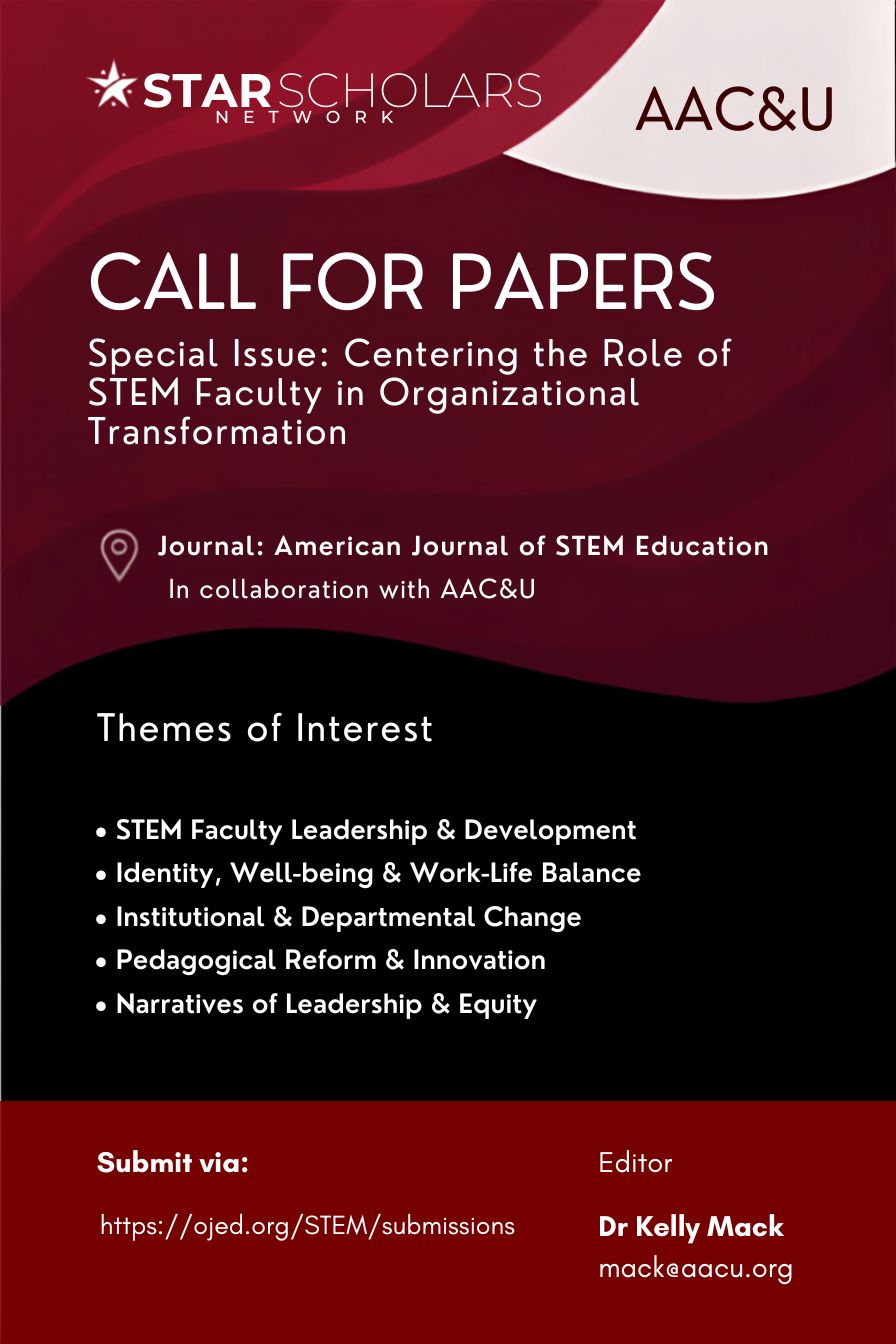
 Call for Special Issue Proposals