Negotiating the machine
Teacher and student resistance to linguistically unequal AI in Moroccan multilingual education
DOI:
https://doi.org/10.32674/0dyret54Keywords:
teacher agency , student voice, educational artificial intelligence, multilingual education, resistance, MoroccoAbstract
Educational AI deployment in multilingual contexts often assumes passive adoption, yet little research examines how users respond to systems positioning languages unequally. This ethnographic study investigated teacher and student responses to AI systems treating French and Arabic differently in Moroccan secondary schools. Eighteen months of fieldwork across four schools included classroom observations (N=78), interviews (N=15), and student focus groups (N=60). Thematic analysis revealed three patterns: teachers developed systematic appropriation strategies in 67% of lessons (78% in Arabic-medium contexts), students recognized differential treatment (78%) and created tactical workarounds, and collective resistance emerged through professional networks and advocacy. Findings challenge technological determinism, demonstrating that user resistance constitutes professional expertise, revealing system inadequacies. Teacher and student adaptations specify requirements for equitable educational AI, offering essential design knowledge that vendors currently ignore.
References
Baker, R. S., & Hawn, A. (2022). Algorithmic bias in education. International Journal of Artificial Intelligence in Education, 32(4), 1052–1092. https://doi.org/10.1007/s40593-021-00285-9
Benjamin, R. (2019). Race after technology: Abolitionist tools for the New Jim Code. Polity Press.
Biesta, G., & Tedder, M. (2007). Agency and learning in the life course: Towards an ecological perspective. Studies in the Education of Adults, 39(2), 132–149. https://doi.org/10.1080/02660830.2007.11661545
Braun, V., & Clarke, V. (2006). Using thematic analysis in psychology. Qualitative Research in Psychology, 3(2), 77–101. https://doi.org/10.1191/1478088706qp063oa
Carspecken, P. F. (1996). Critical ethnography in educational research: A theoretical and practical guide. Routledge.
Cook-Sather, A. (2006). Sound, presence, and power: "Student voice" in educational research and reform. Curriculum Inquiry, 36(4), 359–390. https://doi.org/10.1111/j.1467-873X.2006.00363.x
Creswell, J. W., & Plano Clark, V. L. (2018). Designing and conducting mixed methods research (3rd ed.). SAGE Publications.
de Certeau, M. (1984). The practice of everyday life. University of California Press.
DiSalvo, C., Clement, A., & Pipek, V. (2012). Participatory design for, with, and by communities. In J. Simonsen & T. Robertson (Eds.), Routledge international handbook of participatory design (pp. 182–209). Routledge.
Dweck, C. S. (2006). Mindset: The new psychology of success. Random House.
Emerson, R. M., Fretz, R. I., & Shaw, L. L. (2011). Writing ethnographic fieldnotes (2nd ed.). University of Chicago Press.
Ennaji, M. (2005). Multilingualism, cultural identity, and education in Morocco. Springer. https://doi.org/10.1007/1-4020-3513-2
Ertmer, P. A., & Ottenbreit-Leftwich, A. T. (2010). Teacher technology change: How knowledge, confidence, beliefs, and culture intersect. Journal of Research on Technology in Education, 42(3), 255–284. https://doi.org/10.1080/15391523.2010.10782551
Eubanks, V. (2018). Automating inequality: How high-tech tools profile, police, and punish the poor. St. Martin's Press.
García, O., & Wei, L. (2014). Translanguaging: Language, bilingualism and education. Palgrave Macmillan. https://doi.org/10.1057/9781137385765
Irani, L., Vertesi, J., Dourish, P., Philip, K., & Grinter, R. E. (2010). Postcolonial computing: A lens on design and development. Proceedings of the SIGCHI Conference on Human Factors in Computing Systems, 1311–1320. https://doi.org/10.1145/1753326.1753522
Landis, J. R., & Koch, G. G. (1977). The measurement of observer agreement for categorical data. Biometrics, 33(1), 159–174. https://doi.org/10.2307/2529310
Li, W. (2018). Translanguaging as a practical theory of language. Applied Linguistics, 39(1), 9–30. https://doi.org/10.1093/applin/amx039
Livingstone, S., Mascheroni, G., & Staksrud, E. (2017). European research on children's internet use: Assessing the past and anticipating the future. New Media & Society, 20(3), 1103–1122. https://doi.org/10.1177/1461444816685930
Mingers, J. (2004). Realizing information systems: Critical realism as an underpinning philosophy for information systems. Information and Organization, 14(2), 87–103. https://doi.org/10.1016/j.infoandorg.2003.06.001
Ministry of Industry, Trade, and Digital Economy. (2020). Morocco Digital 2030 strategy. Kingdom of Morocco. https://www.mmsp.gov.ma
Muller, M. J., & Druin, A. (2012). Participatory design: The third space in HCI. In J. A. Jacko (Ed.), The human-computer interaction handbook: Fundamentals, evolving technologies, and emerging applications (3rd ed., pp. 1125–1153). CRC Press.
Muhammad, M., Wallerstein, N., Sussman, A. L., Avila, M., Belone, L., & Duran, B. (2015). Reflections on researcher identity and power: The impact of positionality on community-based participatory research (CBPR) processes and outcomes. Critical Sociology, 41(7–8), 1045–1063. https://doi.org/10.1177/0896920513516025
Noble, S. U. (2018). Algorithms of oppression: How search engines reinforce racism. NYU Press.
Palinkas, L. A., Horwitz, S. M., Green, C. A., Wisdom, J. P., Duan, N., & Hoagwood, K. (2015). Purposeful sampling for qualitative data collection and analysis in mixed-method implementation research. Administration and Policy in Mental Health and Mental Health Services Research, 42(5), 533–544. https://doi.org/10.1007/s10488-013-0528-y
Pangrazio, L. (2016). Reconceptualising critical digital literacy. Discourse: Studies in the Cultural Politics of Education, 37(2), 163–174. https://doi.org/10.1080/01596306.2014.942836
Patton, M. Q. (2015). Qualitative research & evaluation methods: Integrating theory and practice (4th ed.). SAGE Publications.
Penuel, W. R., Roschelle, J., & Shechtman, N. (2007). Designing formative assessment software with teachers: An analysis of the co-design process. Research and Practice in Technology Enhanced Learning, 2(1), 51–74. https://doi.org/10.1142/S1793206807000300
Priestley, M., Biesta, G. J. J., & Robinson, S. (2015). Teacher agency: An ecological approach. Bloomsbury Academic.
QSR International. (2023). NVivo (Release 14) [Computer software]. https://www.qsrinternational.com/nvivo-qualitative-data-analysis-software/home
R Core Team. (2023). R: A language and environment for statistical computing (Version 4.3.1) [Computer software]. R Foundation for Statistical Computing. https://www.R-project.org/
Saunders, B., Sim, J., Kingstone, T., Baker, S., Waterfield, J., Bartlam, B., Burroughs, H., & Jinks, C. (2018). Saturation in qualitative research: Exploring its conceptualization and operationalization. Quality & Quantity, 52(4), 1893–1907. https://doi.org/10.1007/s11135-017-0574-8
Scott, J. C. (1985). Weapons of the weak: Everyday forms of peasant resistance. Yale University Press.
Selwyn, N. (2016). Is technology good for education? Polity Press.
Selwyn, N. (2021). Ed-tech within limits: Anticipating educational technology in times of environmental crisis. E-Learning and Digital Media, 18(5), 496–510. https://doi.org/10.1177/20427530211022951
Tracy, S. J. (2010). Qualitative quality: Eight "big-tent" criteria for excellent qualitative research. Qualitative Inquiry, 16(10), 837–851. https://doi.org/10.1177/1077800410383121
van Dijk, T. A. (2015). Critical discourse analysis. In D. Tannen, H. E. Hamilton, & D. Schiffrin (Eds.), The handbook of discourse analysis (2nd ed., pp. 466–485). John Wiley & Sons.
Warschauer, M. (2004). Technology and social inclusion: Rethinking the digital divide. MIT Press.
Williamson, B. (2017). Big data in education: The digital future of learning, policy and practice. SAGE Publications.
Additional Files
Published
Issue
Section
License
Copyright (c) 2026 Wyssal El Gourari, Rachid Ed-Dali

This work is licensed under a Creative Commons Attribution 4.0 International License.
Copyright (c) [year] [author]
This work is licensed under a Creative Commons Attribution 4.0 International License.
This license permits unrestricted use, distribution, and reproduction in any medium, provided the original author and source are credited. https://creativecommons.org/licenses/by/4.0
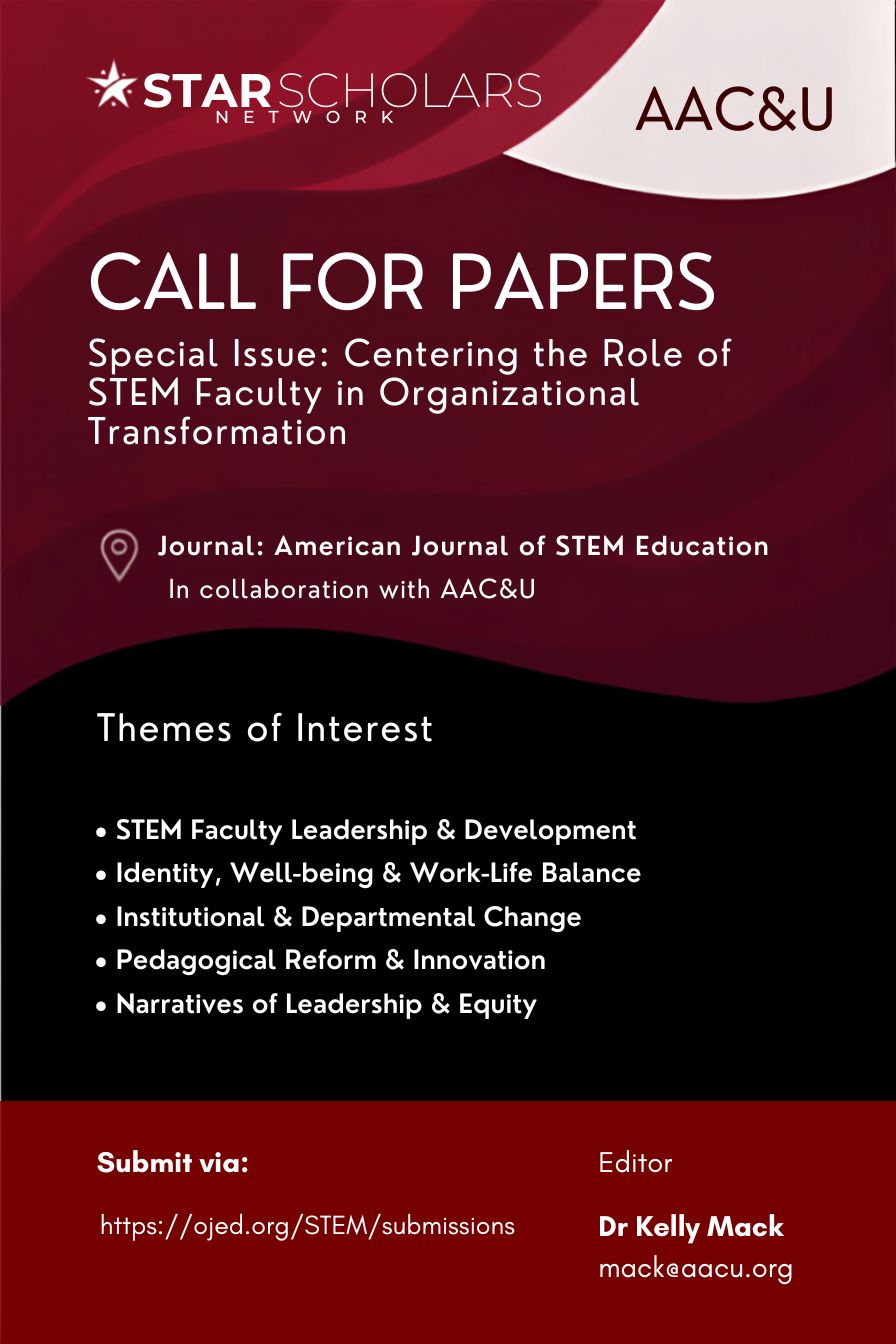
 Call for Special Issue Proposals