Factors predicting students’ science performance
Insights from a nationwide study from Pakistan
DOI:
https://doi.org/10.32674/k72y8m35Keywords:
Elementary school, Large-scale study, Predicting factors, Science, Students’ learning outcomesAbstract
This large-scale study provides evidence on pedagogical quality contributing to students’ science performance when examined alongside teacher, classroom, student, family, school, and regional factors. The sample included 286 science teachers and 15,287 students from 153 public and private schools across six regions of Pakistan. Using validated classroom observation scales and achievement tests for Grades 5, 6, and 8, the study found that pedagogical quality is a significant predictor of science achievement. Girls, younger students, those in Punjab, private-school students, and students with more educated parents performed better. Professional qualifications showed a negative association, while consistent language use across textbooks, instruction, and assessment predicted higher outcomes. Implications for improving science teaching in the Global South are discussed.
References
Ahmed, M., Mahmood, T., Mhyuddin, M. S., & Ghuman, M. A. (2013). Evaluation of school effectiveness of secondary education system: Comparative view of public and private institutions of Pakistan. Journal of Educational and Social Research, 3(3).
Ainley, J., Cloney, D., & Thompson, J. (2020). Does student grade contribute to the declining trend in programme for international student assessment reading and mathematics in Australia? Australian Journal of Education, 64(3), 205–226. https://doi.org/10.1177/0004944120948654
Akhter, N. (2017). Factors Affecting Parents' Inclination towards private school system in Pakistan. Journal of Elementary Education, 27(2), 49–69.
Akiba, M., & Liang, G. (2014). Teacher Qualification and the Achievement Gap: A Cross-National Analysis of 50 Countries. In J. Clark (Ed.), Closing the achievement gap from an international perspective (pp. 21-40). Springer. https://doi.org/10.1007/978-94-007-4357-1_3
Ali, S. & Ahmed, A. (2022). Teaching License in Pakistan: A White Paper. Karachi: Aga Khan University, Institute for Educational Development. Pakistan. https://ecommons.aku.edu/cgi/viewcontent.cgi?article=1322&context=pakistan_ied_pdck
Allison, P. D. (1999). Multiple regression: A primer. Pine Forge Press.
Andrabi, T., Das, J., & Khwaja, A. I. (2008). A dime a day: The possibilities and limits of private schooling in Pakistan. Comparative Education Review, 52(3), 329–355. https://doi.org/10.1086/589764
Ansari, A. N. (2026, May). Teacher preparation for quality education: Comparative insights from twelve countries. Paper presented at the BERA TEAN Conference 2026, Sheffield, United Kingdom.
Asante, K. (2010). Sex differences in mathematics performance among senior high students in Ghana. Gender and Behaviour, 8(2). https://doi.org/10.4314/gab.v8i2.61947
ASER. (2020). Annual Status of Education Report (ASER) Pakistan 2019. ASER Pakistan Secretariat, Idara-e-Taleem-o-Aagahi (ITA). https://aserpakistan.org/document/aser/2019/reports/national/ASER_National_2019.pdf
Awan, A. G., & Zia, A. (2015). Comparative Analysis of Public and Private Educational Institutions: A case study of District Vehari-Pakistan. Journal of Education and Practice, 6(16), 122–130.
Barasa, L. (2020). Teacher quality and mathematics performance in primary schools in Kenya. African Journal of Research in Mathematics, Science and Technology Education, 24(1), 53–64. https://doi.org/10.1080/18117295.2020.1734164
Baum, D. R., & Riley, I. (2019). The relative effectiveness of private and public schools: Evidence from Kenya. School Effectiveness and School Improvement, 30(2), 104–130. https://doi.org/10.1080/09243453.2018.1520132
Bessudnov, A., & Makarov, A. (2015). School context and gender differences in mathematical performance among school graduates in Russia. International Studies in Sociology of Education, 25(1), 63–81.
Bhai, M., & Horoi, I. (2019). Teacher characteristics and academic achievement. Applied Economics, 1–19. https://doi.org/10.1080/00036846.2019.1597963
Bhutta, S. M., & Rizvi, N. F. (2022). Assessing teachers’ pedagogical practices and students’ learning outcomes in science and mathematics across primary and secondary school level: A nationwide study (2018-21). Aga Khan University, Institute for Educational Development, Karachi, Pakistan. https://ecommons.aku.edu/pakistan_ied_pdck/317
Blomeke, S., Olsen, R. V., & Suhl, U. (2016). Relation of student achievement to the quality of their teachers and instructional quality. In T. Nilsen, & J. E. Gustafsson (Eds.), Teacher quality, instructional quality and student outcome: Relationships across countries, cohorts and time (pp. 21–50). Springer and IEA.
Cairns, D. (2019). Investigating the relationship between instructional practices and science achievement in an inquiry-based learning environment. International Journal of Science Education, 41(15), 2113–2135. https://doi.org/10.1080/09500693.2019.1660927
Carroll, J. B. (1963). A model for school learning. Teachers College Record, 64, 723–733.
Coenen, J., Cornelisz, I., Groot, W., Maassen van den Brink, H., & Van Klaveren, C. (2017). Teacher characteristics and their effects on student test scores: A systematic review. Journal of Economic Surveys, 32(3), 848–877. https://doi.org/10.1111/joes.12210
Creemers, B. P. (1994). Effective instruction: An empirical basis for a theory of educational effectiveness. In Advances in school effectiveness research and practice (pp. 189-205). Pergamon.
Crow, LW. (1989). The why, what, how and who of critical thinking and other higher order thinking skills. In Crow, LW. (Ed.), Enhancing critical thinking in the sciences. Second Edition. Houston: Baylor College of Medicine, 9–16.
Darling-Hammond, L. (2017). Teacher education around the world: What can we learn from international practice? European Journal of Teacher Education, 40(3), 291–309. https://doi.org/10.1080/02619768.2017.1315399
Fernández-Sanjurjo, J., Fernández-Costales, A., & Arias Blanco, J. M. (2019). Analysing students’ content-learning in science in CLIL vs. non-CLIL programmes: Empirical evidence from Spain. International Journal of Bilingual Education and Bilingualism, 22(6), 661–674. https://doi.org/10.1080/13670050.2017.1294142
Field, A. (2017). Discovering statistics using SPSS (5th ed.). Sage.
Fischer, C., Foster, B., McCoy, A., Lawrenz, F., Dede, C., Eisenkraft, A., Fishman, B. J., Frumin, K., & Levy, A. J. (2020). Identifying levers related to student performance on high-stakes science exams: Examining school, teaching, teacher, and professional development characteristics. Teachers College Record, 122(2), 1-64. https://doi.org/10.31219/osf.io/83hm2
Fung, D. (2020). The impacts of effective group work on social and gender differences in Hong Kong science classrooms. International Journal of Science Education, 42(3), 372–405. https://doi.org/10.1080/09500693.2020.1713419
Gess-Newsome, J., Taylor, J. A., Carlson, J., Gardner, A. L., Wilson, C. D., & Stuhlsatz, M. A. (2019). Teacher pedagogical content knowledge, practice, and student achievement. International Journal of Science Education, 41(7), 944–963.
Government of Pakistan. (2006). National Curriculum 2006. Ministry of Federal Education and Professional Training Government of Pakistan.
Graham, M., Milanowski, A., & Miller, J. (2012). Measuring and promoting inter-rater agreement of teacher and principal performance ratings. Online Submission. Center for Educator Compensation Reform. https://files.eric.ed.gov/fulltext/ED532068.pdf
Hacıeminoğlu, E., Ertepınar, H., Yılmaz-Tüzün, Ö., & Çakır, H. (2015). Students and school characteristics related to elementary school students' views of the nature of science. Education 3-13, 43(6), 700–721. https://doi.org/10.1080/03004279.2013.865655
Holzberger, D., Reinhold, S., Lüdtke, O., & Seidel, T. (2020). A meta-analysis on the relationship between school characteristics and student outcomes in science and maths – evidence from large-scale studies. Studies in Science Education, 56(1), 1–34. https://doi.org/10.1080/03057267.2020.1735758
Hsu, Y. S., Wu, H. K., & Hwang, F. K. (2007). Factors influencing junior high school teachers' computer-based instructional practices regarding their instructional evolution stages. Journal of Educational Technology & Society, 10(4), 118–130.
Institute of Social and Policy Sciences. (2010). Private sector education in Pakistan: Mapping and musing. Institute of Social and Policy Sciences (I-SAPS). Islamabad: Pakistan. http://i-saps.org/upload/report_publications/docs/1401025704.pdf
Jacob, R., Hill, H., & Corey, D. (2017). The impact of a professional development program on teachers' mathematical knowledge for teaching, instruction, and student achievement. Journal of Research on Educational Effectiveness, 10(2), 379–407. https://doi.org/10.1080/19345747.2016.1273411
Jeynes, W. H. (2015). A meta-analysis: The relationship between father involvement and student academic achievement. Urban Education, 50(4), 387–423. https://doi.org/10.1177/0042085914525789
Joshi, P. R., Digari, S., & James, M. C. (2022). The difference a female teacher makes: Analysis of girls’ school achievement in Nepal. Educational Studies, 1–19. https://doi.org/10.1080/00131946.2022.2051032
Karakose, T., Polat, H., Yirci, R., Tülübaş, T., Papadakis, S., Ozdemir, T. Y., & Demirkol, M. (2023). Assessment of the relationships between prospective mathematics teachers’ classroom management anxiety, academic self-efficacy beliefs, academic amotivation and attitudes toward the teaching profession using structural equation modelling. Mathematics, 11(2), 449.
Kyriakides, L., Christoforou, C., & Charalambous, C. Y. (2013). What matters for student learning outcomes: A meta-analysis of studies exploring factors of effective teaching. Teaching and teacher education, 36, 143–152. https://doi.org/10.1016/j.tate.2013.07.010
Larry, T., & Wendt, J. L. (2021). Predictive relationship between gender, ethnicity, science self-efficacy, teacher interpersonal behaviors, and science achievement of students in a diverse urban high school. Learning Environments Research, 25(1), 141–157. https://doi.org/10.1007/s10984-021-09354-1
Lau, K., & Lam, T. Y. (2017). Instructional practices and science performance of 10 top-performing regions in PISA 2015. International Journal of Science Education, 39(15), 2128–2149. https://doi.org/10.1080/09500693.2017.1387947
Lee, J., Rhee, D., & Rudolf, R. (2018). Teacher gender, student gender, and primary school achievement: Evidence from ten Francophone African countries. The Journal of Development Studies, 55(4), 661–679. https://doi.org/10.1080/00220388.2018.1453604
Li, S., Liu, X., Yang, Y., & Tripp, J. (2021). Effects of teacher professional development and science classroom learning environment on students’ science achievement. Research in Science Education. https://doi.org/10.1007/s11165-020-09979-x
Liu, O. L., Lee, H. S., & Linn, M. C. (2010). An investigation of teacher impact on student inquiry science performance using a hierarchical linear model. Journal of Research in Science Teaching, 47(7), 807–819.
Mahuro, G., & Hungi, N. (2016). Parental participation improves student academic achievement: A case of Iganga and Mayuge districts in Uganda. Cogent Education, 3(1), 1264170. https://doi.org/10.1080/2331186x.2016.1264170
Mose, P. N. (2019). Bilingualizing linguistically homogeneous classrooms in Kenya: Implications on policy, second language learning, and literacy. International Journal of Bilingual Education and Bilingualism, 22(4), 459–472. https://doi.org/10.1080/13670050.2016.1268567
National Education Assessment System (NEAS). (2016). National Assessment Report 2016. Ministry of Federal Education & Professional Training. Islamabad: Pakistan. http://www.neas.gov.pk/Download
NEMIS. (2019). Pakistan Education Statistics 2017-18. http://library.aepam.edu.pk/Books/Pakistan%20Education%20Statistics%202017-18.pdf
Nilsen, T., Gustafsson, J. E., Blömeke, S. (2016). Conceptual Framework and Methodology of This Report. In: Nilsen, T., Gustafsson, JE. (eds) Teacher Quality, Instructional Quality and Student Outcomes. IEA Research for Education, 2. Springer, Cham. https://doi.org/10.1007/978-3-319-41252-8_1
O'Connell, M. (2019). Is the impact of SES on educational performance overestimated? Evidence from PISA survey. Intelligence (75), 41–47.
OECD. (2019). PISA 2018 assessment and analytical framework. Paris: OECD. https://doi.org/10.1787/b25efab8-en
Oppermann, E., Hummel, T., & Anders, Y. (2021). Preschool teachers’ science practices: associations with teachers’ qualifications and their self-efficacy beliefs in science. Early Child Development and Care, 191(5), 800–814.
Potvin, P., & Hasni, A. (2014). Analysis of the decline in interest towards school science and technology from grades 5 through 11. Journal of Science Education and Technology, 23(6), 784–802. https://doi.org/10.1007/s10956-014-9512-x
Prinsloo, C. H., & Harvey, J. C. (2018). The differing effect of language factors on science and mathematics achievement using TIMSS 2015 data: South Africa. Research in Science Education, 50(6), 2207–2226. https://doi.org/10.1007/s11165-018-9769-9
Pun, J., & Macaro, E. (2019). The effect of first and second language use on question types in English medium instruction science classrooms in Hong Kong. International Journal of Bilingual Education and Bilingualism, 22(1), 64-77. https://doi.org/10.1080/13670050.2018.1510368
Reynolds, C. R., Livingston, R. B., & Willson, V. L. (2009). Measurement and assessment in education (2nd ed.). Pearson Education Inc. USA.
Rice, J. K. (2010). The impact of teacher experience: Examining the evidence and policy implications. National center for analysis of Longitudinal data in education research (CALDER). https://files.eric.ed.gov/fulltext/ED511988.pdf .
Robinson, S. R. (2011). Teaching logic and teaching critical thinking: revisiting McPeck. Higher Education Research & Development, 30(3), 275–287. https://doi.org/10.1080/07294360.2010.500656
Rosario, P., Núñez, J. C., Valle, A., González-Pienda, J., & Lourenço, A. (2013). Grade level, study time, and grade retention and their effects on motivation, self-regulated learning strategies, and mathematics achievement: a structural equation model. European Journal of Psychology of Education, 28(4), 1311–1331.
Sarouphim, K. M., & Chartouny, M. (2016). Mathematics education in Lebanon: Gender differences in attitudes and achievement. Educational Studies in Mathematics, 94(1), 55–68.
Shah, Z. A., Malik, M. A., & Akhtar, J. H. (2020). Exploring the impact of demographic variables gender, parental education and locality on science achievement at 8th and 9th Grades. Bulletin of Education and Research, 42(1), 185–198.
Singh, A. (2014). Test score gaps between private and government sector students at school entry age in India. Oxford Review of Education, 40(1), 30–49. https://doi.org/10.1080/03054985.2013.873529
Smith-Wooley, E., Pingault, J. B., Selzam, S., Rimfeld, K., Krapohl, E., von Stumm, S., Dale, P. S., Young, T., Allen, R., & Plomin, R. (2018). Differences in exam performance between pupils attending selective and non-selective schools mirror the genetic differences between them. Science of Learning, 3(3), 1–8. https://www.nature.com/articles/s41539-018-0019-8
Symeou, L. (2007). Cultural capital and family involvement in children's education: Tales from two primary schools in Cyprus. British Journal of Sociology of Education, 28(4), 473–487. https://doi.org/10.1080/01425690701369525
Tabachnick, B. G., Fidell, L. S., & Ullman, J. B. (2019). Using multivariate statistics. Pearson.
Telese, J. A. (2012). Middle school mathematics teachers’ professional development and student achievement. The Journal of Educational Research, 105(2), 102–111.
Teodorović, J., Milin, V., Bodroža, B., Đerić, I. D., Vujačić, M., Jakšić, I. M., Stanković, D., Cankar, G., Charalambous, C. Y., Damme, J. V., & Kyriakides, L. (2021). Testing the dynamic model of educational effectiveness: The impact of teacher factors on interest and achievement in mathematics and biology in Serbia. School Effectiveness and School Improvement, 1-35. https://doi.org/10.1080/09243453.2021.1942076
Thapa, A. (2015). Public and private school performance in Nepal: An analysis using the SLC examination. Education Economics, 23(1), 47–62. https://doi.org/10.1080/09645292.2012.738809
TIMSS. (2020). TIMSS 2019 International Results in Mathematics and Science. International Association for the Evaluation of Educational Achievement. https://timss2019.org/reports/wp-content/themes/timssandpirls/download-center/TIMSS-2019-International-Results-in-Mathematics-and-Science.pdf
Toma, R. B., Greca, I. M., & Orozco Gómez, M. L. (2019). Attitudes towards science and views of nature of science among elementary school students in terms of gender, cultural background and grade level variables. Research in Science & Technological Education, 37(4), 492–515. https://doi.org/10.1080/02635143.2018.1561433
Tonga, F. E., Eryiğit, S., Yalçın, F. A., & Erden, F. T. (2022). Professional development of teachers in PISA achiever countries: Finland, Estonia, Japan, Singapore and China. Professional Development in Education, 48(1), 88-104. https://doi.org/10.1080/19415257.2019.1689521
Toropova, A., Johansson, S., & Myberg, E. (2019). The role of teacher characteristics for student achievement in mathematics and student perceptions of instructional quality. Education Inquiry, 10(4), 276–299. https://doi.org/10.1080/20004508.2019.1591844
Tsai, L., & Yang, C. (2015). Hierarchical effects of school-, classroom-, and student-level factors on the science performance of eighth-grade Taiwanese students. International Journal of Science Education, 37(8), 1166–1181. https://doi.org/10.1080/09500693.2015.1022625
USAID. (2006). Situation Analysis of Teacher Education in Pakistan: Towards a Strategic Framework for Teacher Education and Professional Development. https://eric.ed.gov/?id=ED497052
USAID. (2010). Rationalization of Pre-Service Teacher Education Programs in Pakistan. Pre-STEP USAID: Islamabad.
Wang, C., & Liou, P. (2017). Students’ motivational beliefs in science learning, school motivational contexts, and science achievement in Taiwan. International Journal of Science Education, 39(7), 898–917. https://doi.org/10.1080/09500693.2017.1310410
Wilberg, M., & Rolfsman, E. (2019). The association between science achievement measures in schools and TIMSS science achievement in Sweden. International Journal of Science Education, 41(16), 2218–2232. https://doi.org/10.1080/09500693.2019.1666217
Wilder, S. (2014). Effects of parental involvement on academic achievement: A meta-synthesis. Educational Review, 66(3), 377–397. https://doi.org/10.1080/00131911.2013.780009
Wiseman, A. W., & Al-Bakr, F. (2013). The elusiveness of teacher quality: A comparative analysis of teacher certification and student achievement in Gulf Cooperation Council (GCC) countries. Prospects, 43(3), 289–309. https://doi.org/10.1007/s11125-013-9272-z
Xiang, N., & Chiu, S. W. K. (2021). Parents or teachers: whose guidance matters more in students’ alignment of educational plan and achievement? A comparative study of Taiwan and Hong Kong. Asia Pacific Journal of Education, 1–16.
Zhang, D., & Campbell, T. (2015). An examination of the impact of teacher quality and "Opportunity gap” on student science achievement in China. International Journal of Science and Mathematics Education, 13(3), 489-513. https://doi.org/10.1007/s10763-013-9491-z
Zhang, F., & Bae, C. L. (2020). Motivational factors that influence student science achievement: A systematic literature review of TIMSS studies. International Journal of Science Education, 42(17), 2921–2944. https://doi.org/10.1080/09500693.2020.1843083
Zhang, F., Bae, C. L., & Broda, M. (2022). Science self-concept, relatedness, and teaching quality: A multilevel approach to examining factors that predict science achievement. International Journal of Science and Mathematics Education, 20(3), 503–529. https://doi.org/10.1007/s10763-021-10165-2
Additional Files
Published
Issue
Section
License
Copyright (c) 2026 Sadia Muzaffar Bhutta, Nusrat Fatima Rizvi, Sohail Ahmad, Anil Khamis, Aisha Naz Ansari

This work is licensed under a Creative Commons Attribution 4.0 International License.
Copyright (c) [year] [author]
This work is licensed under a Creative Commons Attribution 4.0 International License.
This license permits unrestricted use, distribution, and reproduction in any medium, provided the original author and source are credited. https://creativecommons.org/licenses/by/4.0
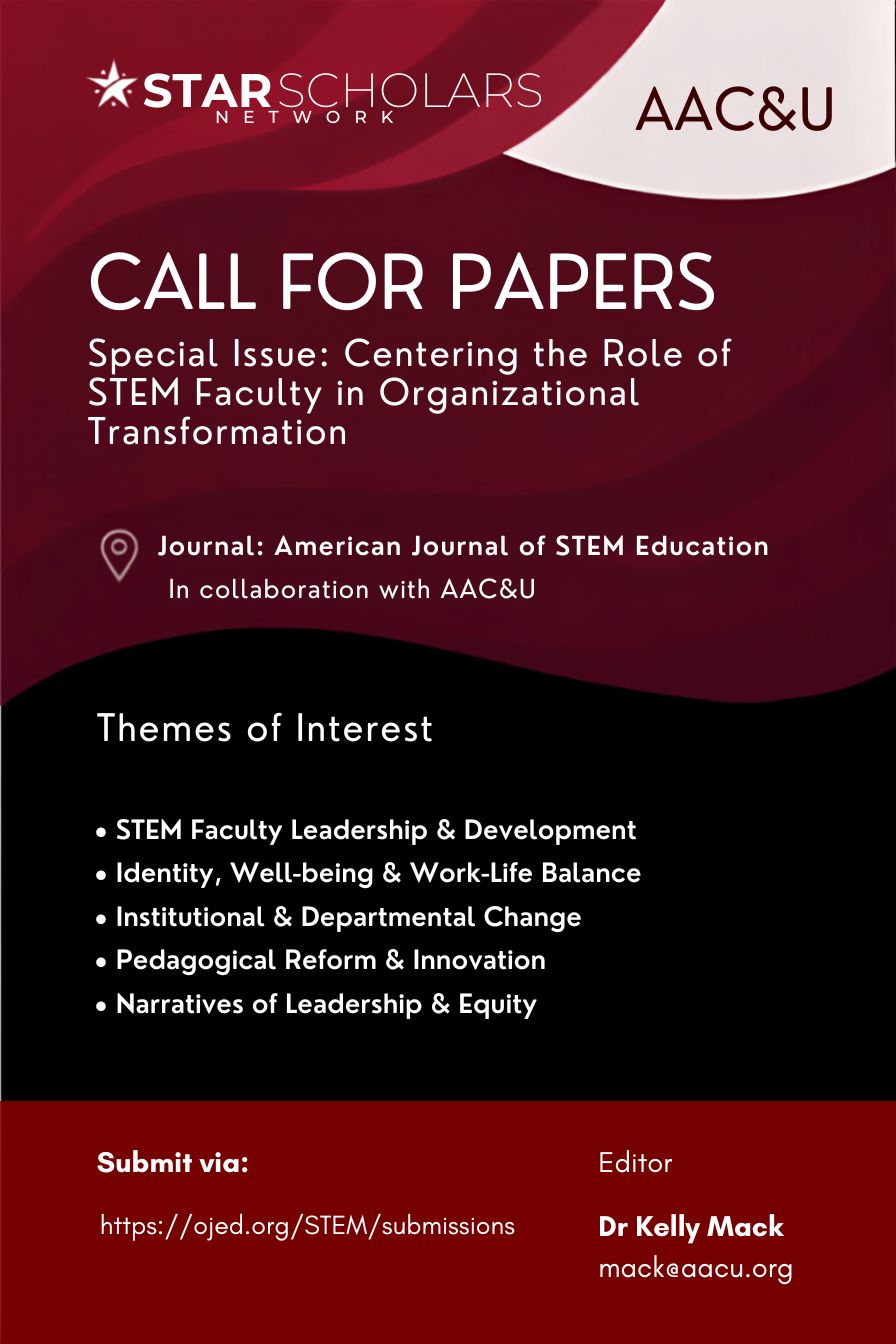
 Call for Special Issue Proposals